
Criminal Cases in Talbot County Courts
Talbot County has no separate State Court, so the local court map matters. Talbot County Superior Court tries felonies and keeps indictments, pleas, judgments, and sentences through its clerk. The county is part of the Chattahoochee Judicial Circuit. Magistrate Court handles arrest and search warrants, first appearances, and preliminary hearings. Probate Court can hear certain misdemeanors, traffic cases, and game and fish matters because no State Court sits in Talbot County.
All three offices are in the Talbot County Courthouse at 26 South Washington Avenue in Talbotton. The shared address does not merge their files. A Magistrate warrant record is not the later Superior Court prosecution, and a Probate matter will not appear in the felony file. Start with the charge level and the stage of the case. Then call the right clerk.
The official Talbot County court directory shows how the local offices fit together.
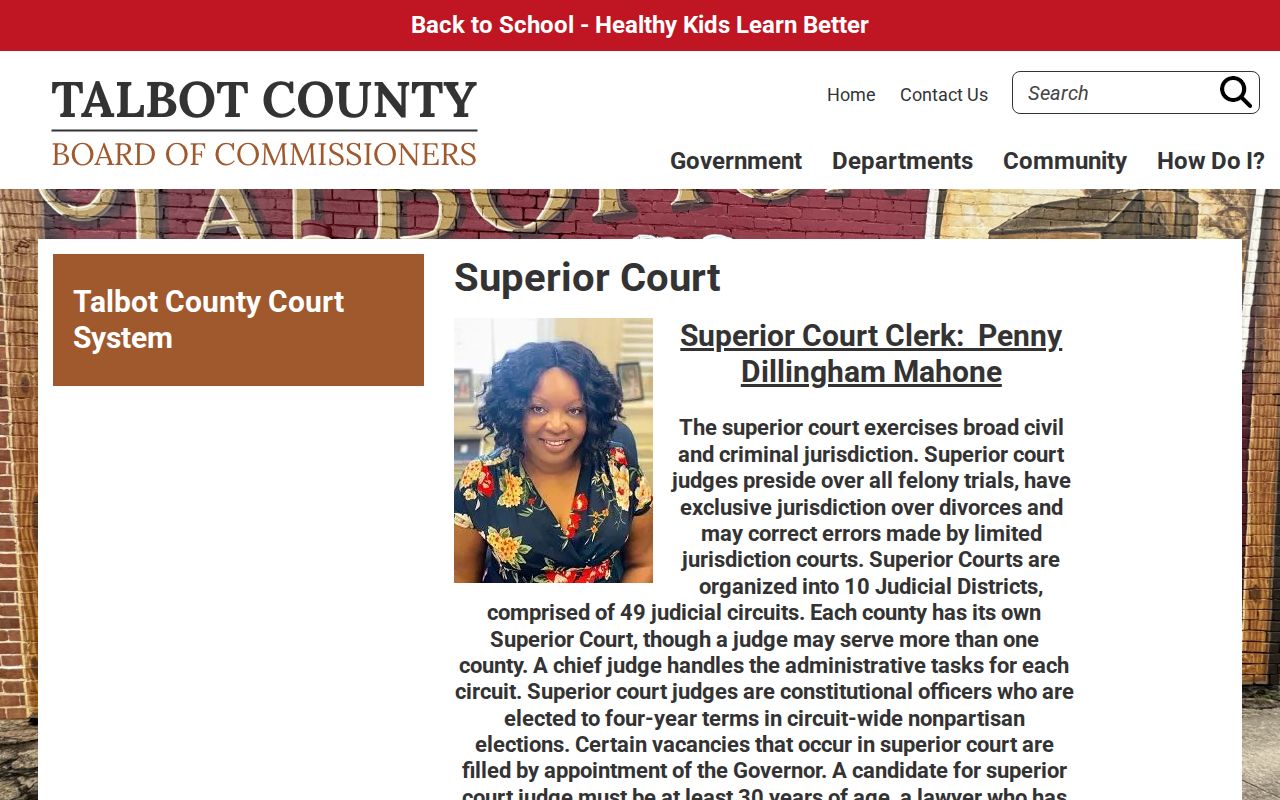
That local source is the best starting point for felony-file contacts and office details.
Talbot Criminal Cases Without State Court
In many Georgia counties, a State Court handles misdemeanors. Talbot County is different. Probate Court's limited criminal role means a person searching Talbot County criminal records should not assume every non-felony charge goes to one familiar court. A traffic or qualifying misdemeanor matter may remain with Probate Court, while a felony moves to Superior Court after the early Magistrate stage.
This split can explain why a name is absent from one index. Call Probate Court at 706-665-8866 for matters within its jurisdiction and Magistrate Court at 706-665-3595 for warrant or preliminary-hearing records. Both list weekday hours from 8:00 a.m. to 4:30 p.m. The county Probate and Magistrate page confirms the shared courthouse location and each office's role.
The state judiciary also describes the distinct work of Superior Court. This source helps identify jurisdiction, but the Talbot clerk still holds the local file.
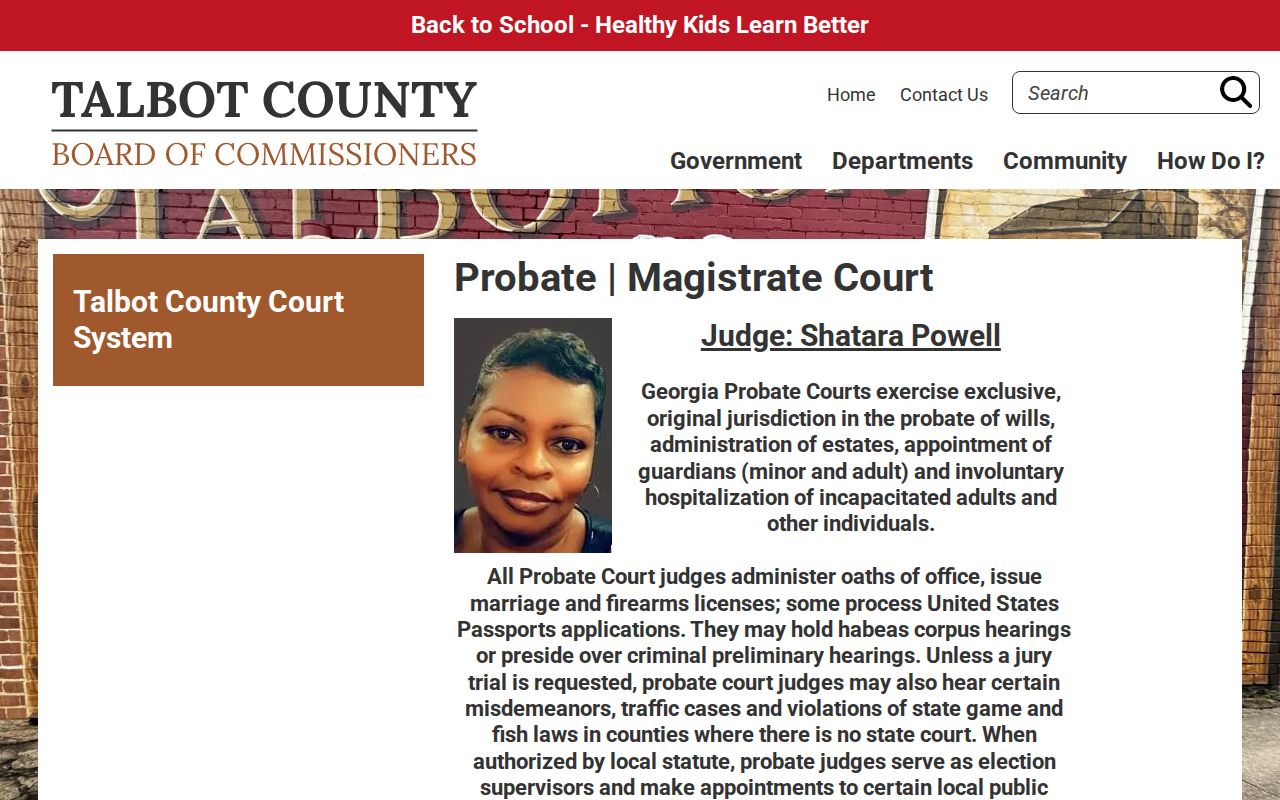
The office page makes clear why lower-court records may be essential to reconstruct the start of a case.
How to Search Talbot County Case Records
No official Talbot County public criminal-case portal or date range was located. The Georgia Judicial Gateway and E-Access directory routes readers toward participating local systems, but it is not a complete statewide database. For Talbot records, direct clerk contact is the reliable route. Have a full name, approximate filing year, and case number if known.
- Decide whether the matter belongs to Superior, Magistrate, or Probate Court based on the charge and case stage.
- Call the clerk and provide the full name, approximate year, and any case or warrant number.
- Ask for a docket or index search, then request the docket sheet before selecting documents.
- Name the exact records needed, such as the indictment, plea, disposition, judgment, sentence, or sealing order.
- Ask whether counter review is available and request a quote for plain or certified copies before ordering.
Talbot County does not publish criminal search or copy fees, accepted payment methods, or archive retrieval times. Confirm each point with the clerk rather than relying on practices from another county.
| Search Detail | Format | Needed? | Use |
|---|---|---|---|
| Full name | Text | Yes | Primary party-index key |
| Case number | Text | If known | Fastest match to one file |
| Approximate year | Year | Recommended | Narrows current and archived indexes |
| Court or charge level | Category | Recommended | Routes the request to the right clerk |
| Document name | Text | For copies | Limits cost and retrieval work |
Talbot County Criminal Clerk Counter
The Superior Court clerk's counter is the working center for Talbot County felony files. Clerk Penny Dillingham-Mahone's office lists 706-665-3276 and 706-665-3239, Monday through Friday from 8:00 a.m. to 4:30 p.m. The street address is 26 South Washington Avenue, Talbotton, GA 31827, and the mailing address is P.O. Box 325.
Superior Court Clerk
26 South Washington Avenue
Talbotton, GA 31827
Mail: P.O. Box 325
706-665-3276 or 706-665-3239
Monday-Friday, 8:00 a.m.-4:30 p.m.
Ask first for the docket sheet. It provides the event list needed to choose a charging paper, plea, order, judgment, or sentence. If a disability affects access to the counter, the official court pages invite a request for reasonable accommodation through the relevant ADA coordinator. Device, photography, security, and parking details are not stated in the official source, so confirm them before visiting.
Note: An online directory result never proves that every Talbot County criminal case document has been digitized or made remotely available.
What the Talbot County Case File Shows
A court file tracks the prosecution, not merely the arrest. It can connect a charging instrument to hearings, motions, pleas, count-by-count outcomes, and the sentence. The docket is the file's event index. Read the filed documents behind important entries, because a brief status label may not show the terms of an order or the result for each count.
| Case Number & Court | Identifies the local file and the court with custody of it. |
|---|---|
| Charging Document | Shows the indictment, accusation, or other filed charges and their counts. |
| Docket Entries | Lists filings, motions, hearings, continuances, orders, and other events. |
| Plea & Hearing Dates | Records formal responses and scheduled or completed proceedings. |
| Disposition & Judgment | Shows the result for each count, including conviction, acquittal, dismissal, or nolle prosequi. |
| Sentence & Conditions | May state confinement, probation, fines, restitution, and court-ordered terms. |
A GCIC history is different. It summarizes identity-linked arrests and reported dispositions statewide. For the fuller procedural record, use the clerk's case file. The broader relationship among these sources appears in the Talbot County criminal history overview.
Talbot County Criminal Charging Terms
Georgia charging language can change the meaning of a docket entry. A single Talbot County case may contain several counts and several outcomes. Never assign the result of one count to the whole file without checking the disposition entries.
- True bill
- A grand jury's return of an indictment after finding probable cause.
- No bill
- A decision not to indict the charge presented to the grand jury.
- Accusation
- A prosecutor-filed charging instrument used when Georgia law permits a case to proceed without indictment.
- Nolle prosequi
- The prosecutor's formal decision not to continue a charge at that time.
- Disposition
- The outcome of a charge or case, which must be read count by count.
A booking charge is an intake allegation, not the final charging instrument. The prosecutor may amend it, use a different accusation, present an indictment, or decline the charge. For that reason, a court disposition should be matched to the booking only through names, dates, case numbers, and charge details.
Stages of a Talbot County Criminal Case
Talbot County criminal court records develop in stages. Magistrate records may document a warrant, first appearance, and preliminary hearing. A first appearance addresses custody and bond, not guilt. A felony can then move through the prosecutor and grand jury into Superior Court. Arraignment records the plea, while later docket entries show motions, hearings, continuances, trial, or a negotiated resolution.
Case flow: Charges Filed › Arraignment › Pretrial › Plea or Trial › Disposition › Sentencing
A plea produces plea and sentencing papers. A trial produces verdict entries. Appeals start a separate appellate trail, although the Talbot County clerk retains the trial record. The full process may begin with an arrest, but the court file becomes the source for what the state formally charged and how each charge ended.
Note: A first appearance or bond entry is a procedural event and does not establish guilt or predict the final outcome.
Different Outcomes in One Talbot Case
A party-index result can conceal important detail. One Talbot County criminal case may end with a conviction on one count, dismissal on a second, and nolle prosequi on a third. The docket sheet points to those outcomes, but the disposition and judgment documents supply the clearest proof.
Compare the charge text and count number at every stage. An arrest description may differ from the indictment. A plea may cover fewer counts than the original filing. Sentencing terms attach to the adjudicated counts, not to every allegation that once appeared. If a GCIC record lacks the final result, obtain a certified disposition from the correct Talbot clerk and follow the GBI correction route described in the official criminal-history information guidance.
The Georgia court directory is illustrated in its official E-Access source.
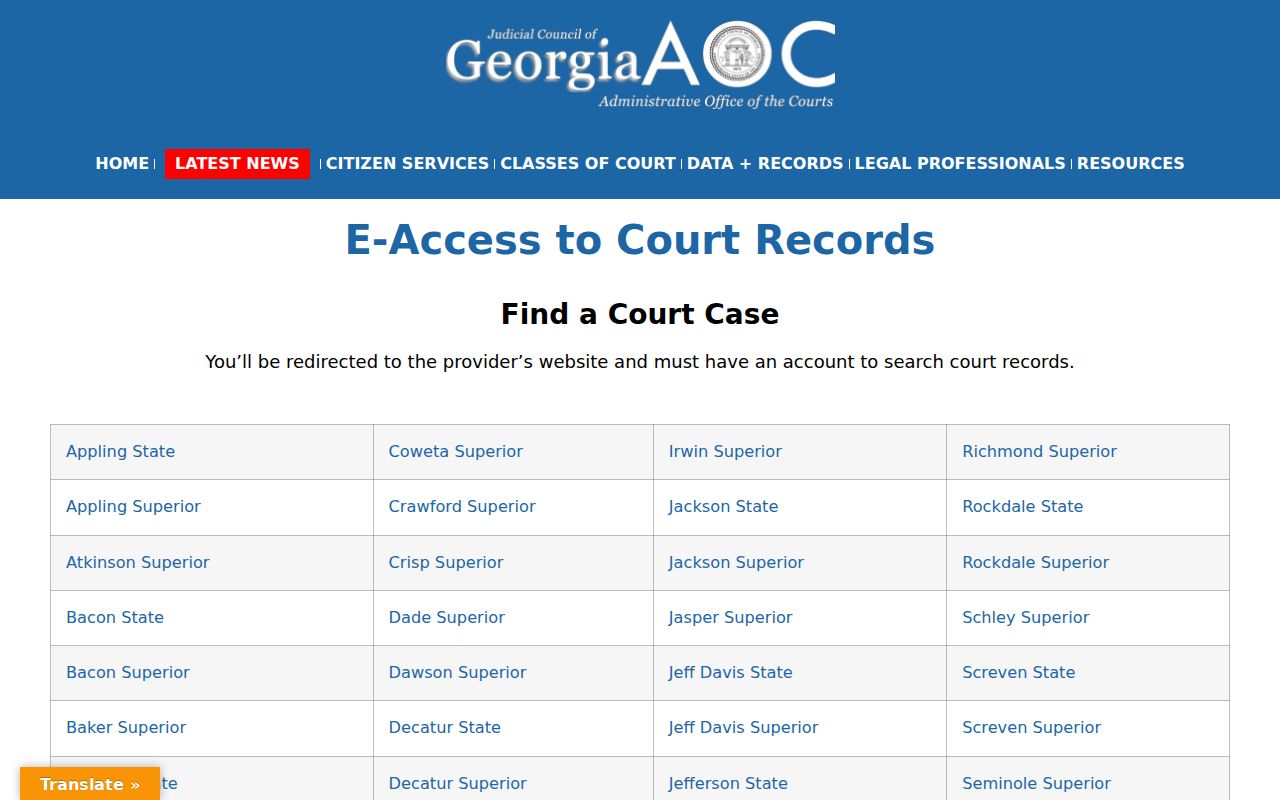
It is a routing tool, while the local clerk remains the authority on the actual Talbot County case file.
Older Talbot County Criminal Files
The 1892 Talbot County Courthouse still serves as the records center for current and older local matters. No official source states how far back a public electronic index reaches or how long archive retrieval takes. Give the clerk the fullest identifiers possible and ask whether an older volume or stored file requires extra retrieval time.
Request a quote before ordering copies. Talbot County does not publish a criminal-copy fee schedule, a certified-copy price, or payment rules online. If only the outcome is needed, ask for the final disposition or judgment rather than the entire file. For historical research, specify the approximate year, court, party name, and likely charge so staff can identify the correct index.
The state judiciary's description of Georgia Superior Court jurisdiction provides context for the felony archive.
The local clerk, rather than the statewide page, confirms whether a particular old Talbot County file can be viewed or copied.
Federal prosecutions are outside the Talbot County clerk's file and instead run through the U.S. District Court for the Middle District of Georgia.
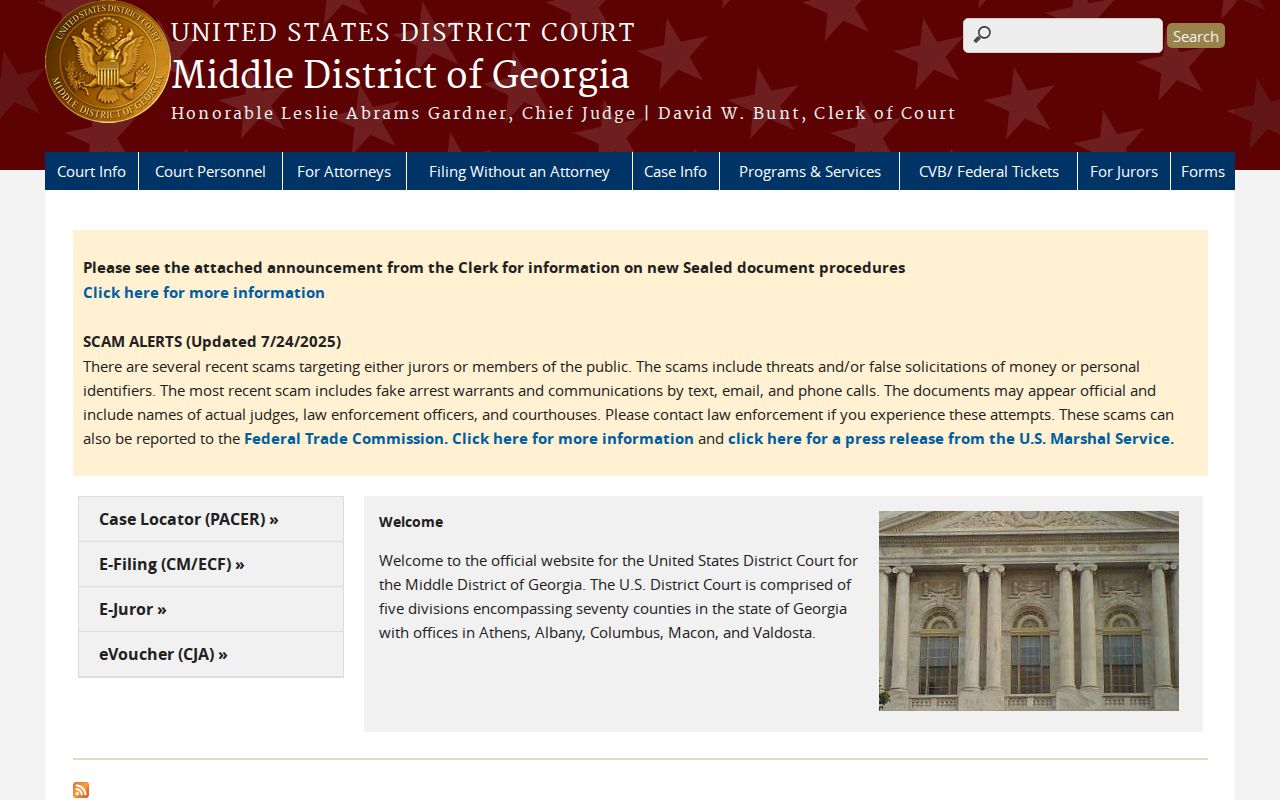
That court's official site is the authority for federal district records involving Talbot County, while the county courthouse remains the source for Georgia trial files.
Public federal docket access is available through the official PACER service.
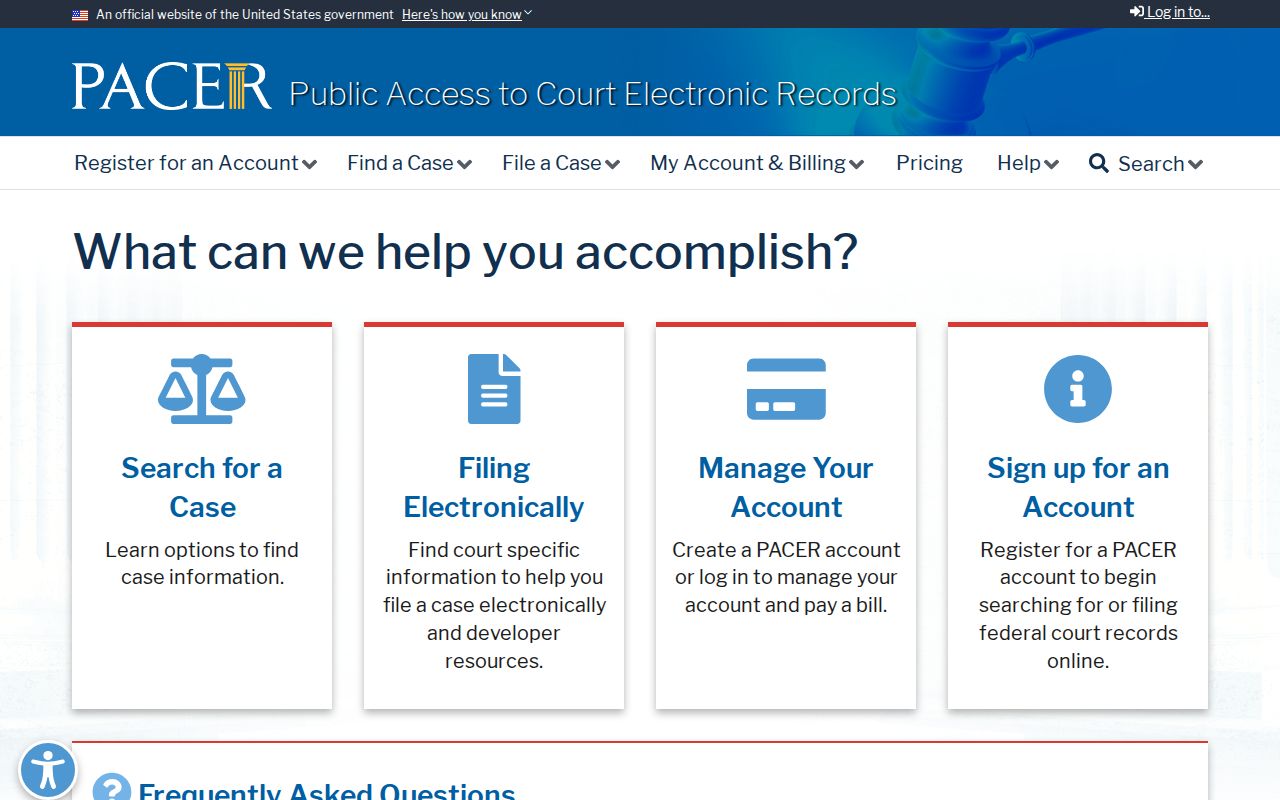
PACER does not contain Talbot County Superior, Magistrate, or Probate Court files, so use it only after confirming that the matter is federal.
Talbot County Case Access and Restrictions
The Georgia Open Records Act supports access to agency records subject to exemptions, but court access also follows court rules and clerk practices. Juvenile material, victim-sensitive information, full personal identifiers, sealed warrants, and sealed or restricted records may be withheld or redacted. An active case does not make every investigative item public.
Georgia record restriction under O.C.G.A. § 35-3-37 limits eligible arrest-history dissemination. Hiding the public court file can require a separate sealing order from the court that holds it.
If a Talbot County case does not appear in an index, contact the clerk. The record may be in another local court, archived, entered under a different identifier, or lawfully restricted. A missing search result is not proof that no case exists. Likewise, a restricted GCIC entry does not by itself prove that the court docket has been sealed.