
How to Check Criminal History in Talbot County
Start by defining the event that needs proof. A recent arrest or current local custody question belongs with the Talbot County Sheriff Department. Felony pleadings, hearings, judgments, and sentences belong with the Clerk of Superior Court. Probate and Magistrate Court may hold warrants, preliminary-hearing records, traffic files, and certain misdemeanor matters because Talbot County has no separate State Court. A statewide final felony conviction can appear through Georgia Felon Search, while a person seeking their own fuller Georgia record can arrange GCIC inspection.
Collect the full legal name, date of birth, likely filing or arrest year, and any case or booking number. Note prior names and spelling variants. Those details keep two people with similar names from being confused and help the clerk locate an older paper file. Searchers should ask what a result proves. A booking entry records intake, not guilt. A court judgment proves the filed outcome. A state rap sheet depends on identity matching and agency reporting.
- Call the office that created the record and confirm its request method, identification rules, fees, and payment options.
- Use a name, birth date, case year, and unique number when available. Do not rely on a name alone.
- Request the docket sheet first for a court case. It identifies charges, events, orders, and the disposition.
- Compare an arrest or booking entry with the later court file, since charges can be amended, dismissed, or replaced.
- Order a certified judgment or official identity-history review when an authoritative copy or correction is needed.
Talbot County Record Offices
Talbot County has no advertised one-stop criminal-record portal. The working route is a small set of local counters. Call before traveling because the county pages do not publish criminal-record copy fees, accepted payment methods, identification rules, or detailed file-access procedures.
Superior Court Clerk
26 South Washington Avenue, Talbotton, GA 31827
706-665-3276 or 706-665-3239
Weekdays, 8:00 a.m.-4:30 p.m.
Probate and Magistrate
26 South Washington Avenue, Talbotton, GA 31827
Probate: 706-665-8866
Magistrate: 706-665-3595
Weekdays, 8:00 a.m.-4:30 p.m.
Sheriff Department/911
188 Jackson Avenue, Talbotton, GA 31827
706-665-3111
Fax: 706-665-3972
The sheriff is the first local contact for incident, arrest, booking, jail, and agency-held warrant material. The clerk is the source for pleadings and dispositions. Splitting a request by custodian avoids asking one office to produce a record another office controls.
The official Talbot County homepage provides the countywide directory behind these local contacts.
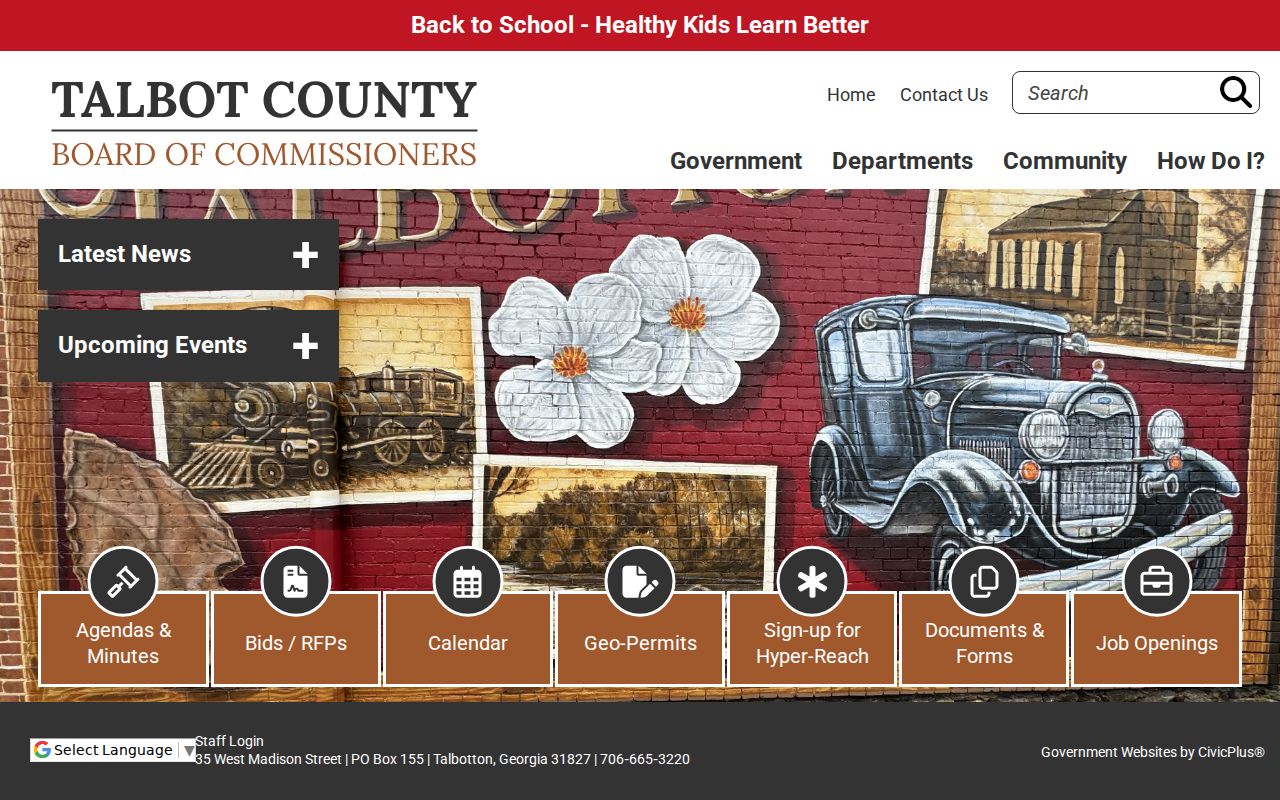
Use the department page, not a general directory label, to confirm the office before sending a request.
Official Georgia Background Checks
The Georgia Bureau of Investigation's Georgia Crime Information Center maintains the statewide Computerized Criminal History system. Georgia Felon Search is the public name-based product for final Georgia felony convictions, pleas, and sentences. Each viewed transaction costs $15. The form requires first name, last name, date of birth, and sex; race, middle name, and a lawfully supplied Social Security number can help distinguish similar identities. A “No Record Found” response does not rule out misdemeanors, juvenile history, restricted information, pending cases, out-of-state records, or arrests that did not lead to a covered felony result.
For self-review, most sheriffs or police departments can explain local procedures. GCIC also schedules appointments at its Decatur lobby by telephone. Georgia Applicant Processing Service, administered through Fieldprint, captures fingerprints for authorized programs. Registration and a live appointment locator determine the proper site; the research did not verify a fixed enrollment location inside Talbot County.
The GCIC overview identifies the state repository's systems and responsibilities.
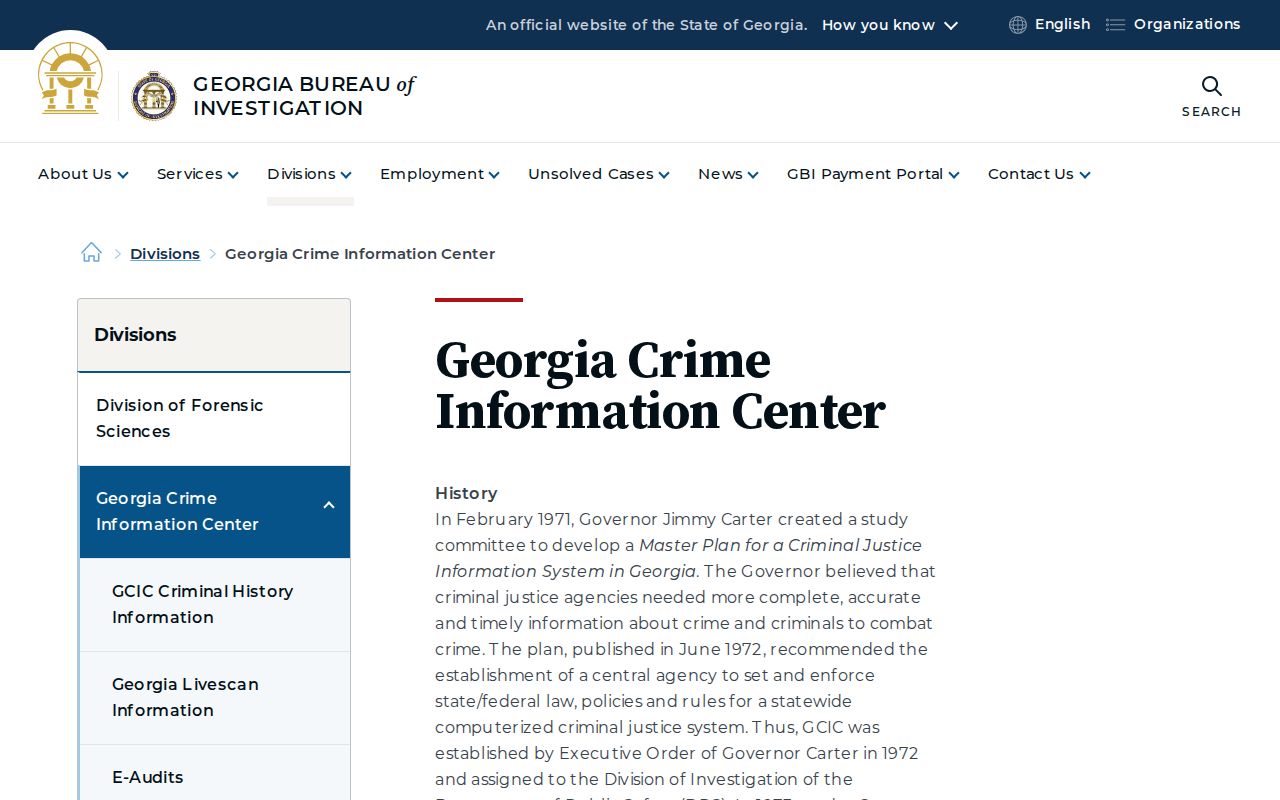
Its identity-based history is distinct from the documents in a Talbot County court file.
Georgia Felon Search Fields
The statewide transaction portal is useful only when its narrow scope fits the question. Exact identifiers matter, and the fee applies when a rap sheet is viewed.
| Field | Required | Use |
|---|---|---|
| First and last name | Yes | Primary identity match |
| Date of birth | Yes | Separates people with similar names |
| Sex | Yes | Required identifying selection |
| Middle name and race | No | Recommended disambiguators |
| Social Security number | No | Sensitive optional identifier |
A local docket remains the better source for motions, hearing entries, dismissed charges, and certified judgments. Use the state result as one defined slice, not as a universal clearance.
The live Georgia Felon Search transaction portal displays the official search workflow.
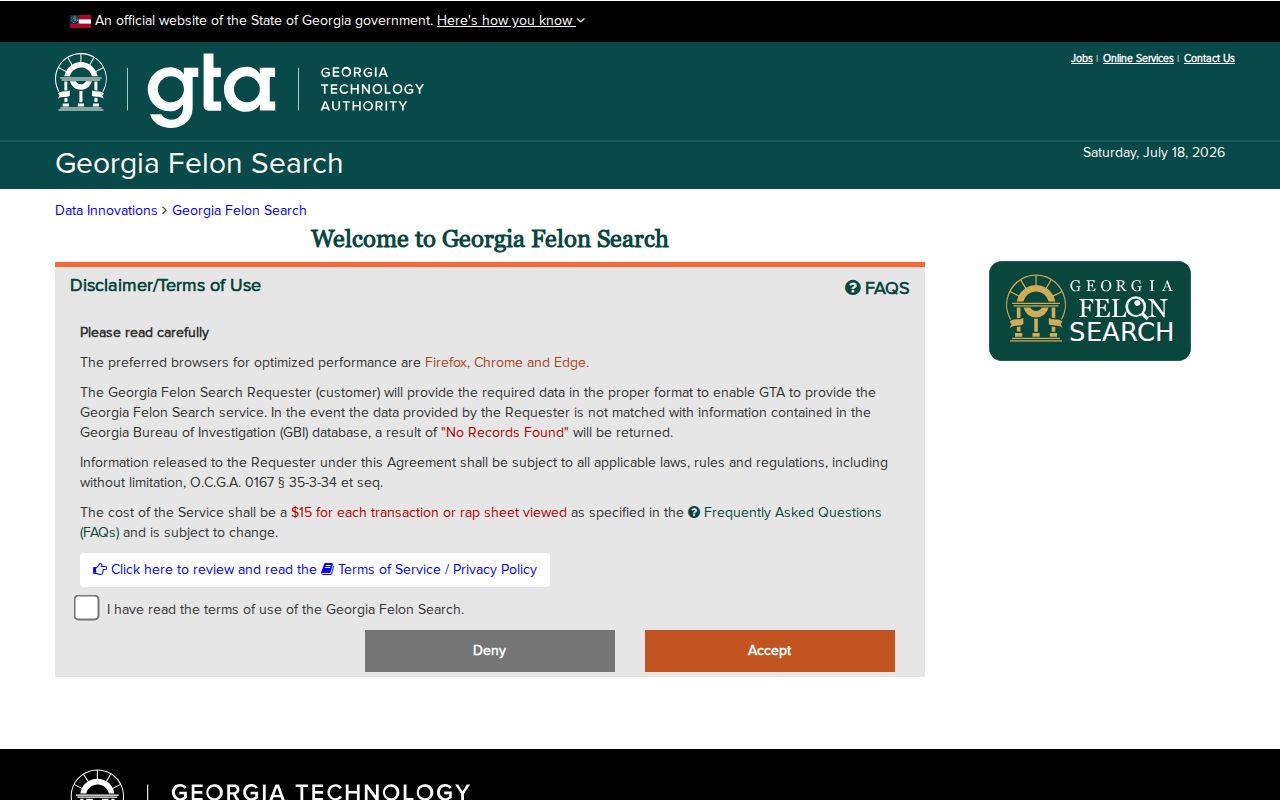
Review the official FAQ first so the portal's exclusions are clear.
Types of Criminal Records
A single incident creates records at different stages. The arresting agency writes an incident or arrest report. Jail intake produces a booking entry, photograph, fingerprints, charge list, bond data, and custody status. Magistrate Court can issue a warrant and conduct a preliminary hearing. A prosecutor may later file an accusation or seek an indictment, while the trial-court clerk preserves the docket, pleadings, orders, judgment, and sentence.
GCIC assembles a statewide identity-based history from agency reports. The Georgia Department of Corrections publishes state custody and sentence data, while the Georgia Sex Offender Registry serves a distinct public-notification purpose. Each record answers a different question.
- Arrest and booking records show the allegation and custody snapshot at intake.
- Criminal court files show filed proceedings and the judicial result.
- GCIC history links reported Georgia arrest cycles, dispositions, and custody data to an identity.
- Warrants originate with a court and may be withheld while sealed or unexecuted.
- Supervision and registry records describe separate correctional or public-notification duties.
How Talbot Records Flow
Record flow: Incident › Arrest › Booking › Court filing › Disposition › GCIC update › Custody or supervision.
Fingerprints and charge data sent after a custodial arrest connect the event to a state identification record. Courts, prosecutors, custodial agencies, and other justice agencies report later outcomes. Timing and identifier mismatches can create gaps. A booking charge may be amended, dismissed, no-billed, or replaced by an indictment before GCIC receives the final disposition.
That is why verification moves in a chain. Check the arresting agency or jail for the first event, the clerk for the filed case, GCIC for the statewide identity history, and GDC for a sentenced state prisoner. Missing data in one source does not erase a record held elsewhere.
What a Talbot County Criminal Record Shows
Read each field in context and confirm that the identifiers refer to the right person. “Disposition” means the court's outcome for a charge. “Nolle prosequi” means the prosecutor chose not to proceed at that time. An indictment is a formal accusation returned by a grand jury, not a conviction. Bond governs release while a case is pending; it is not a sentence.
| Name & Identifiers | Legal name, aliases, birth date, sex, race, and agency or state identification numbers. |
|---|---|
| Arrest / Booking Data | Arresting agency, event and intake dates, booking number, initial charges, bond, and release or custody status. |
| Charges & Statutes | Offense wording, Georgia code citation, counts, severity, and later amendments. |
| Disposition | Dismissal, plea, verdict, no bill, nolle prosequi, or other charge-level outcome. |
| Sentence | Confinement, probation, fines, credit for time served, and court-ordered conditions. |
| Custody / Supervision Status | Jail or prison location, release, felony probation through DCS, or parole status when publicly reported. |
Talbot Courthouse File Search
Talbot County does not advertise a local online criminal-case lookup. The practical route is the courthouse counter or a call to the correct clerk. For a felony, ask the Superior Court clerk to search by defendant name and filing year, then request the docket sheet before selecting copies. Ask whether an older file is onsite or archived and whether certification is needed. The Georgia Judicial Gateway and E-Access directory routes users to participating local systems, but it is not one complete statewide criminal database.
The courthouse at the center of Talbotton's commercial square houses the Superior Court clerk and the combined Probate/Magistrate offices. The Romanesque building dates to 1892. Its shared role matters: a search that stops after a Superior Court name check can miss a warrant or preliminary-hearing record in Magistrate Court or a qualifying misdemeanor and traffic matter in Probate Court.
The official county court page shows the courthouse and explains its role.
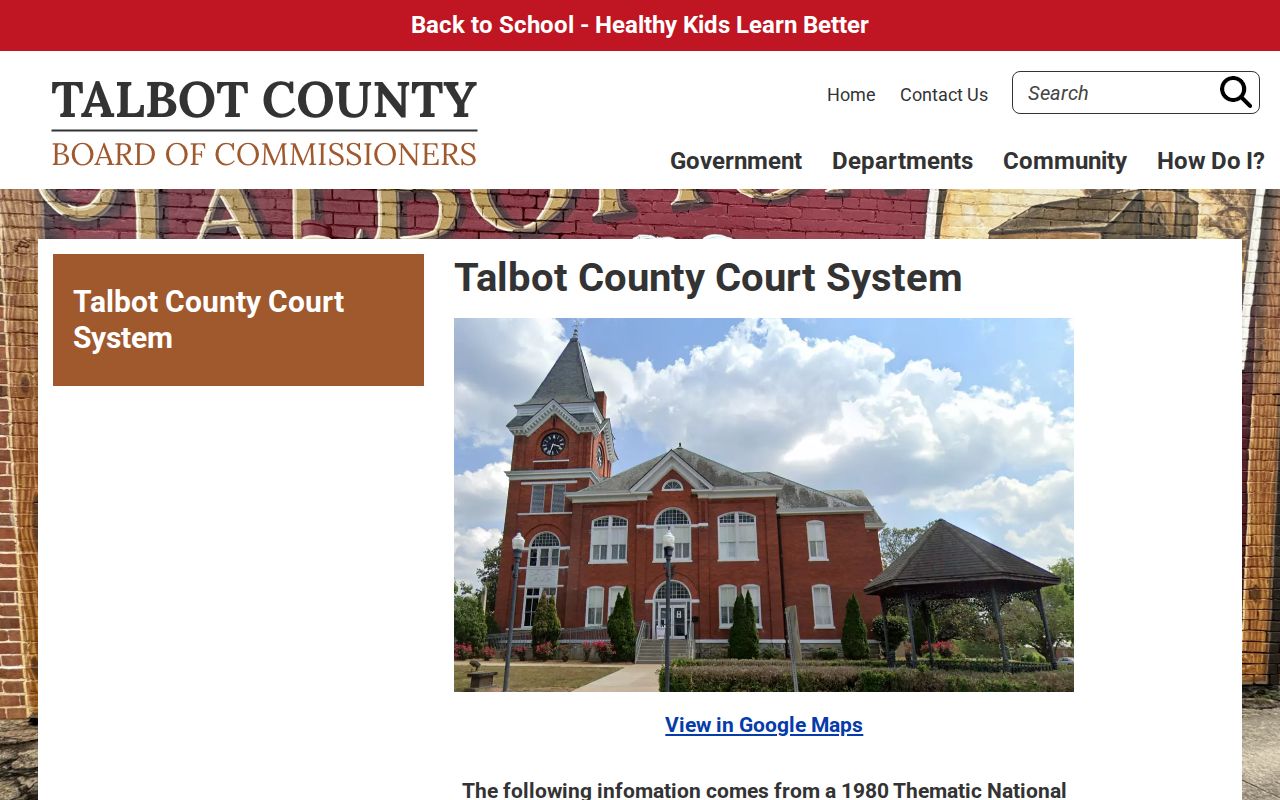
The page helps identify the right office, while the clerk confirms the actual file and copy procedure.
Public Access Laws
The Georgia Open Records Act favors access to agency records, subject to specific exemptions and redaction. A request should describe the record, date range, location, incident number, and desired format. Under the general response framework, an agency usually must answer within three business days by producing available records or explaining whether they exist and when production is expected. That is not a promise of final delivery in three days. Lawful search, retrieval, and copying charges may apply.
Key Statutes:
O.C.G.A. §§ 50-18-70 through 50-18-77 establish Georgia's public-record request framework.
O.C.G.A. § 35-3-34 governs dissemination of Georgia criminal-history information, including public felony-conviction access.
O.C.G.A. § 35-3-37 governs eligible record restriction and related court sealing.
O.C.G.A. § 42-1-12 establishes Georgia registration and public registry duties.
Talbot Sheriff Record Requests
No standalone records division, dedicated request email, criminal-history fee schedule, booking log, jail roster, or warrant search was found on the official Talbot County site. Contact the Sheriff Department/911 office at 706-665-3111, send mail to P.O. Box 544, Talbotton, GA 31827, or confirm whether fax requests are accepted at 706-665-3972. Ask about counter hours, identification, payment, and the cost estimate before work begins.
Name the document instead of asking the office to answer a broad question. Useful descriptions include an incident or arrest report, booking sheet, jail log entry, warrant return, or a defined 911/CAD record. The county's general contact form is an inquiry fallback, not a dedicated criminal-record request portal. Its election-labeled open-records page should not be treated as a sheriff request form.
Active-investigation material, juvenile information, victim-sensitive content, personal identifiers, and confidential criminal-history data can be withheld or redacted. A denial should state its legal basis. Narrowing the date range or requested fields can reduce both delay and cost.
Sealed, Expunged & Restricted
Georgia uses the term record restriction. Under O.C.G.A. § 35-3-37, an eligible arrest cycle can be limited from general public dissemination while remaining available for criminal-justice purposes. Restriction is not the physical destruction of every report, docket, or source document. Court records may require a separate sealing petition and order.
Eligibility depends on the case outcome and statutory conditions. Juvenile files, sealed records, and protected identifiers follow their own access rules. A person correcting a GCIC entry should obtain a certified disposition from the court and use GCIC's update process. Completed restriction applications and supporting material can be routed to GCIC as its instructions direct. The clerk can explain access to a sealed local file but cannot replace legal advice about eligibility.
Talbot Custody Status Checks
Current Talbot County jail custody is not published in a verified official online roster. Call the sheriff at 706-665-3111. For a person committed to state custody, use GDC Find an Offender. It accepts a GDC ID, case number, name, gender, race, age, and most recent institution as search inputs. A GDC result concerns state correctional custody and sentence data, not a current Talbot jail booking and not a full criminal history.
The Georgia Felon Search FAQ explains the public conviction product and its limits.
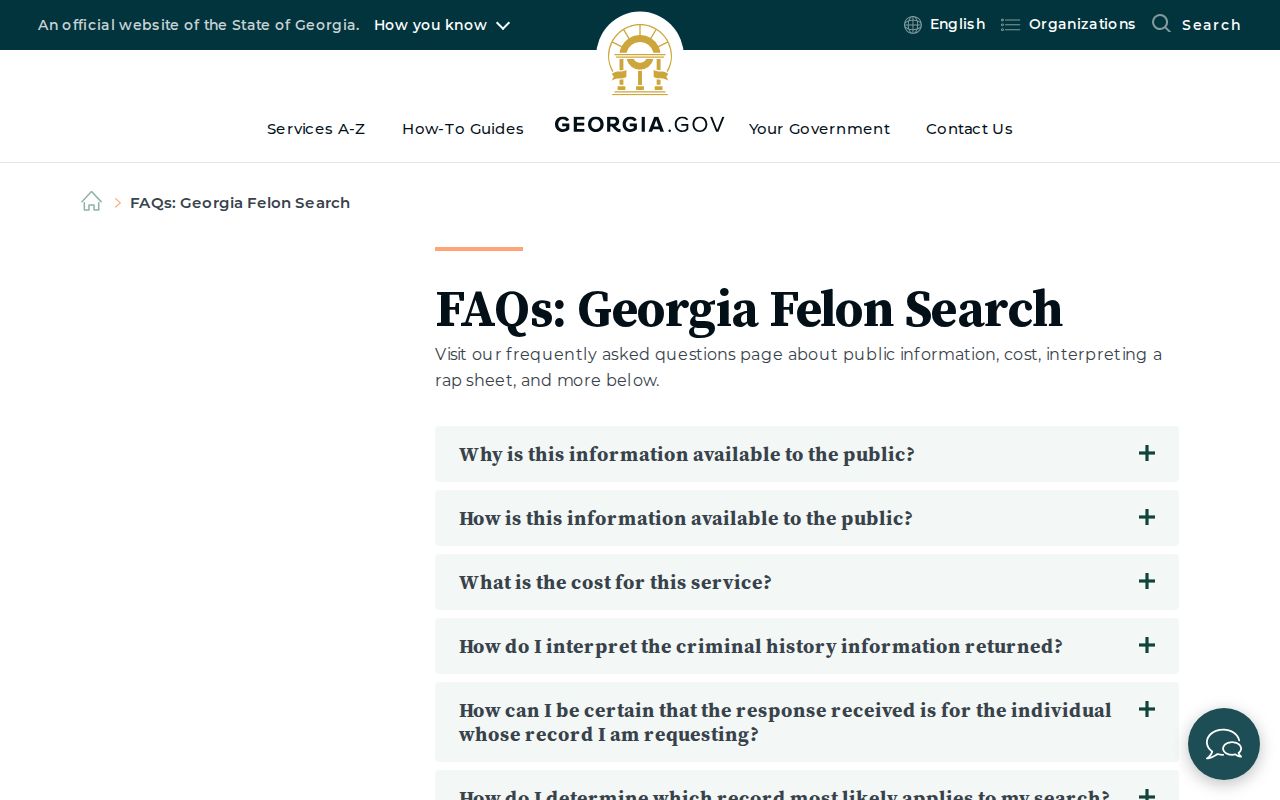
Compare any state result with the local court judgment when exact charges and disposition language matter.
Criminal Records by City in Talbot County
Manchester, Talbotton, and Woodland are the three largest incorporated places identified in the research. Their routes differ. Manchester publishes police and municipal-court contacts. Talbotton's searches lean on county offices located in the city. Woodland has no separately verified local police or municipal-court channel in the official source set, so searchers should use the Talbot sheriff and county courts rather than inventing a city database.
Manchester Criminal History
Population 3,584 · City police and municipal court maintain local records.
Talbotton Criminal History
Population 742 · County sheriff and courthouse counters are located here.
Woodland Criminal History
Population 312 · County and state channels supply the verified search routes.
Talbot County Court History
Talbot County was created in 1827, and Talbotton became its county seat. The first session of the Georgia Supreme Court took place in Talbotton at the old Claiborne Hotel in 1846, when the state's first fifteen attorneys were sworn. That history does not make modern appellate records local, but it gives the courthouse square an unusual place in Georgia's judicial story.
The current courthouse was built in 1892. Bruce & Morgan designed its Romanesque towers, arched entrance, and clock tower. Inside, a coved courtroom ceiling ends in a checkerboard of beaded-board squares, and small stained-glass transoms survive. The same compact public building still anchors felony files, lower-court contacts, and in-person record searches. Visitors should call about security and device rules because the official pages do not publish detailed screening, photography, or recording policies.
For broad agency-level crime trends, the FBI Crime Data Explorer is the official national data route.
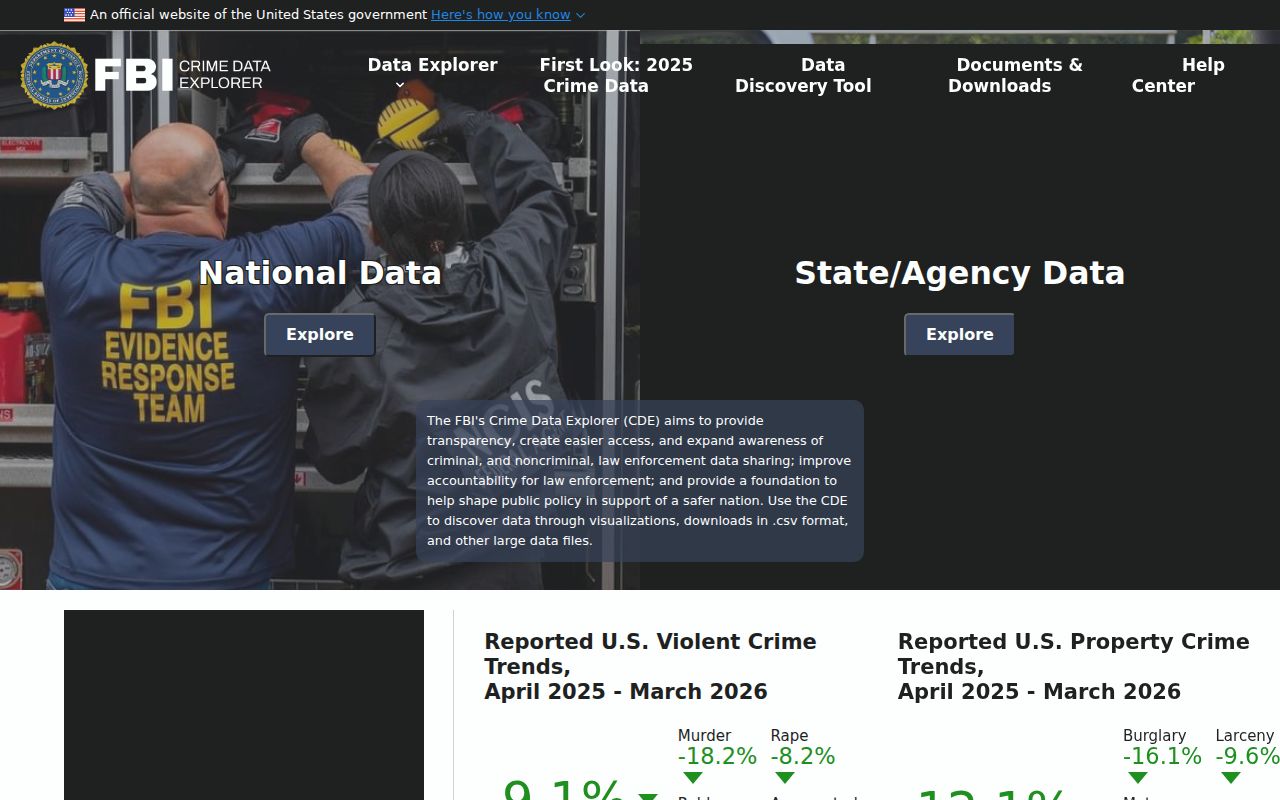
Statistics should never be treated as proof of a person's arrest, charge, or conviction.